Imaging Plankton Across Size Spectra
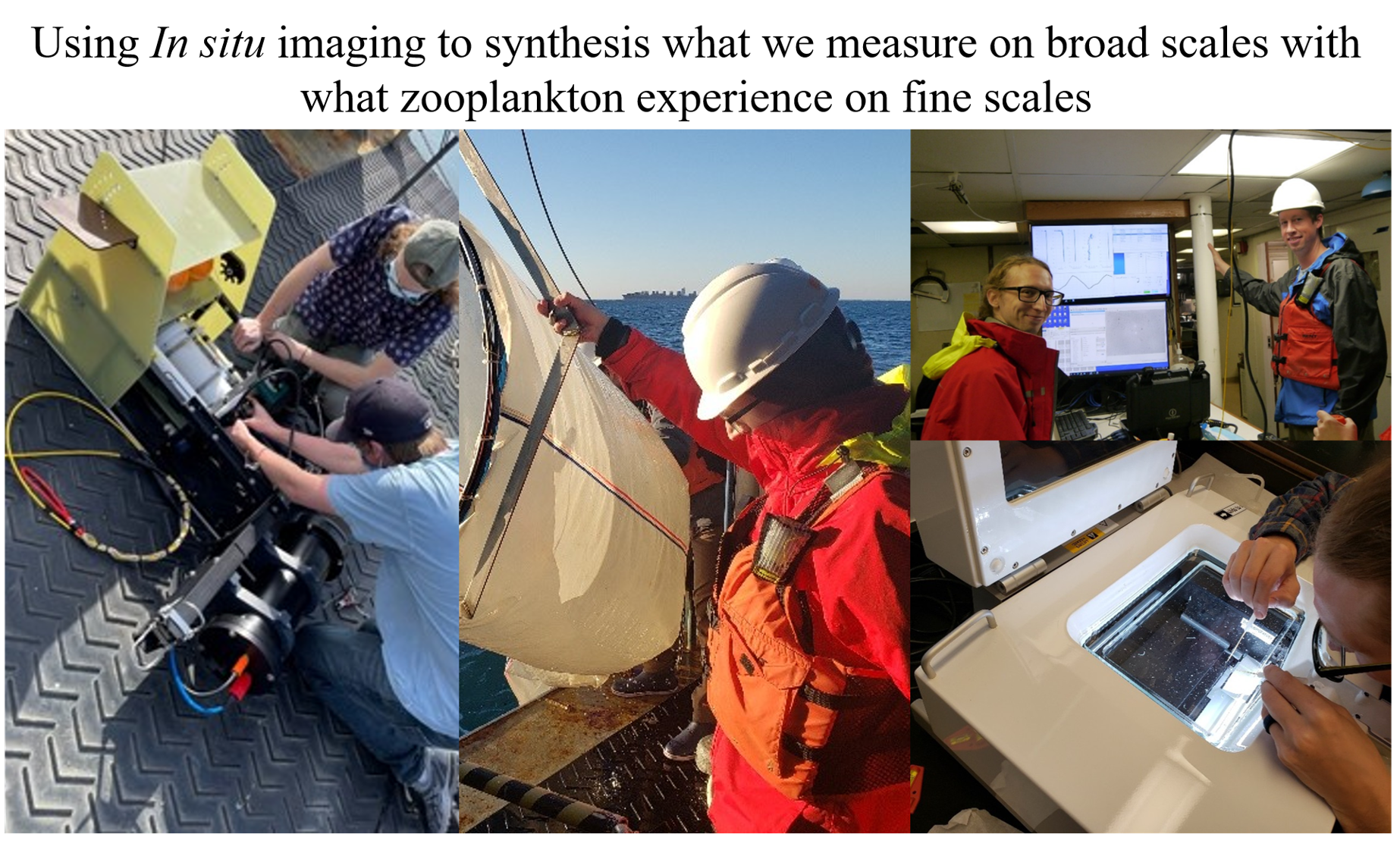
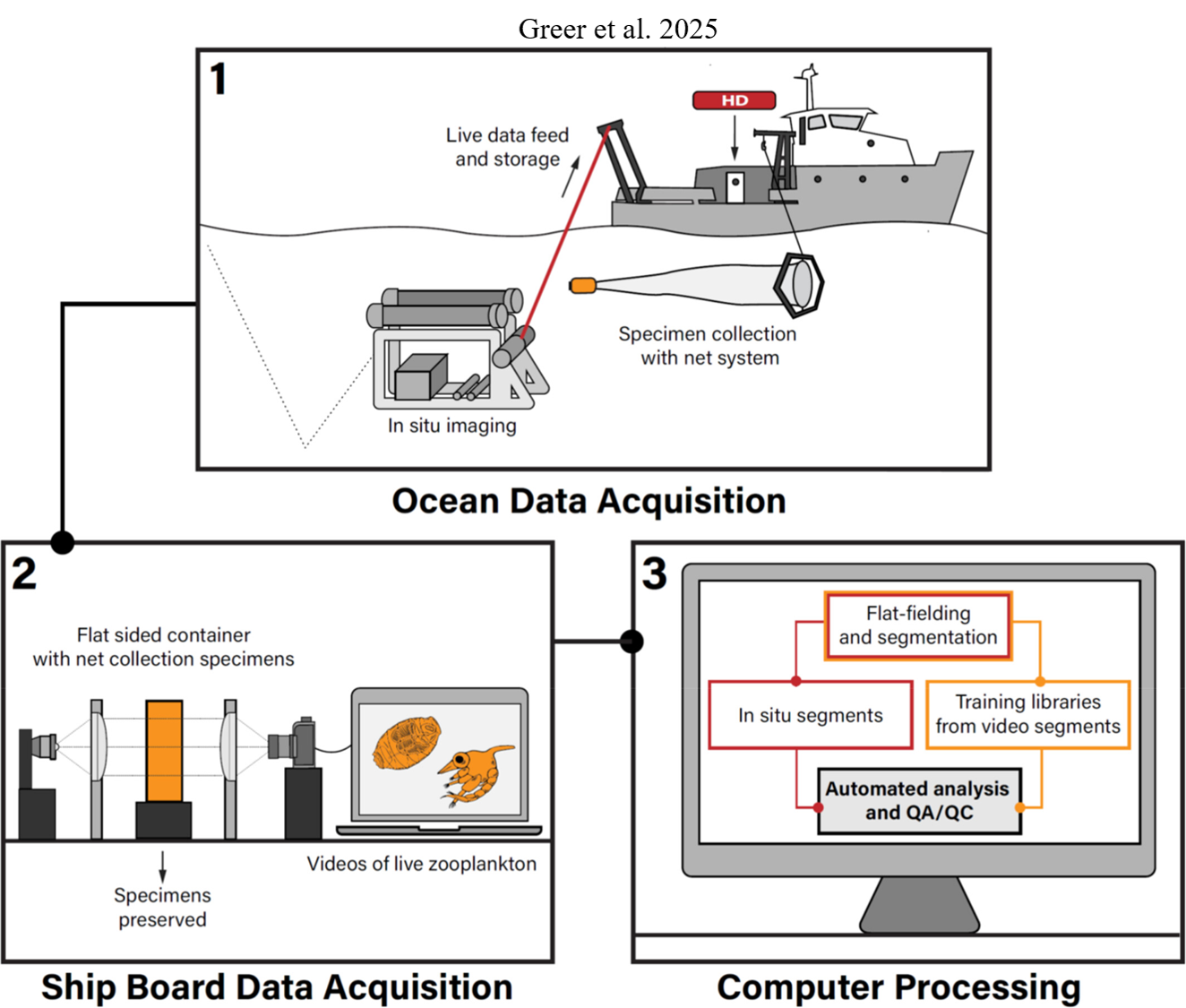
I am a Biological Oceanographer studying planktonic distributions and interactions across trophic, spatial, and temporal scales. For my MSc thesis under the direction of Dr. Elizabeth Harvey, I quantified Transparent Exopolymer Particles (TEP, basically polysaccharide dominated ‘sticky’ colloidal organic matter) using Spectrophotometry during a mesocosm experiment in Norway (MesoHux 2017) as well as across the estuary-gradient of the South Atlantic Bight shelf. In my thesis, I also examined TEP accumulation rates in the context of dilution experiments and microzooplankton grazing rates. As a PhD student under the guidance of Dr. Adam Greer, I contributed significant amounts to development and image-validation processing of a modular shadowgraph imaging platform, developed by Bellamare LLC that resulted in co-authorship of a methods manuscript in Limnology & Oceanography: Methods. For my dissertation research, I used shadowgraph in situ imaging to understand how life stages of cosmopolitan blooming gelatinous zooplankton, the pelagic tunicates salps and doliolids, occupy different realized niche space under the same available habitat conditions. In my dissertation, I also used the fine-scale observations of an imaging vehicle to correlate the vertical spatial layering of doliolid populations with the vertical layering of Chlorophyll-a fluorescence in a Western Boundary Current region, and to understand how zooplankton functional traits occupy vertical water column space in a seasonally productive shelf. Across my MSc and PhD field experiences, I have gained skills to quantify in situ abundances of organic materials from colloids to macrozooplankton using Spectrophotometry, FlowCAM, Shadowgraph imaging, and traditional net methods; this includes using machine learning approaches to differentiate living and detrital material in image data.
From my undergraduate research in using cameras and CellTrak to quantify Artemia response to light cues under kairomone (a fish mucous molecule potentially sensed by zooplankton) concentration gradients I have been inspired with the use of imaging to quantify biological processes. My published authored and co-authored research now spans ~6 orders of magnitude in organism size, from phytoplankton-grazing dynamics to macrozooplankton ecology. I have an interdisciplinary skillset that combines field observations, experimental incubations and rates, existing datasets, and big-data computational approaches. My primary research interests are to better understand gelatinous zooplankton biogeochemical roles and to integrate observations from different observational platforms (in situ imaging + acoustics, satellites, eDNA, and more) with rate-measurements to pursue novel insights into ocean functions.