
Modular shadowgraph imaging for zooplankton ecological studies in diverse field and mesocosm settings
Published in Limnology & Oceanography Methods, 2025
Abstract
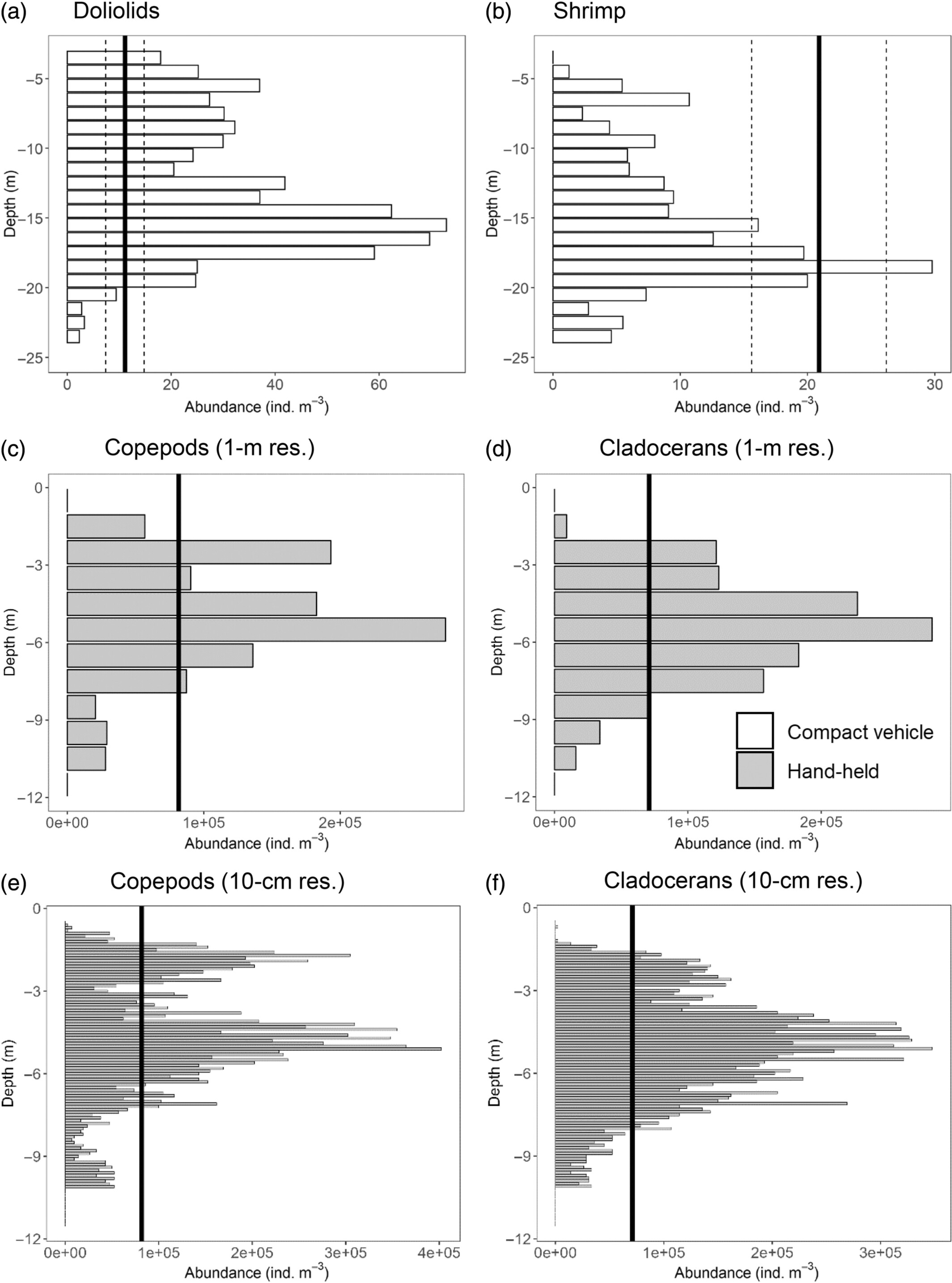
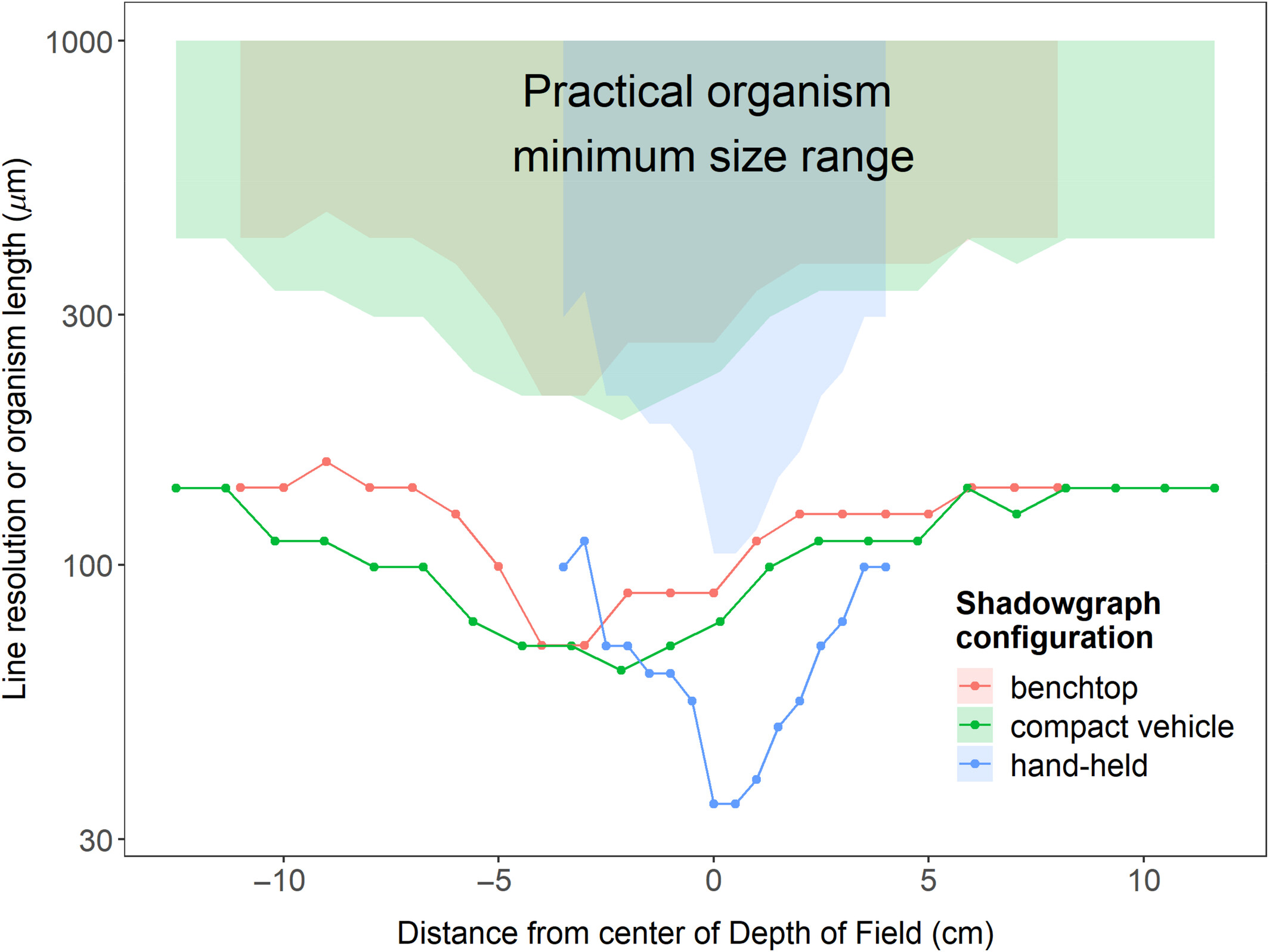
Various iterations of shadowgraph imaging have been used to quantify zooplankton in situ with high spatial resolution. Because these systems can image relatively large volumes of water, they are especially useful for resolving less common meso- or macrozooplankton taxa (< 50 ind. m−3), such as larval fishes and gelatinous animals. However, larger volume imagers are typically integrated with heavy towed vehicles and deployed from research vessels, which introduces high costs and limits sampling approaches. Here we demonstrate that versatile configurations of shadowgraph imaging, including modular benchtop, handheld, and towed, compact vehicle systems (along with customizable software), allow for tailoring sampling to a variety of marine and freshwater settings (including mesocosms). These systems encompass a suite of possible architectures, designed for adapting the imaging depth of field, acquisition rates, sensor configuration, and deployment method to fit a wide range of sampling protocols, with high vertical resolution (~ 5 cm) and adequate taxonomic capabilities for > 0.5 mm organisms. The benchtop system facilitates an interactive approach to observe and quantify zooplankton behaviors and optical properties. Video footage from the benchtop system generates thousands of regions of interest min−1 for target organisms with variable orientations and swimming postures. When used in conjunction with in situ imaging, the benchtop system can build large machine learning training libraries targeted toward rare or morphologically diverse zooplankton, which often includes the larval stages of economically valuable taxa. These modular hardware and software components increase affordability and versatility while broadening the scope of scientific questions addressed by plankton imaging systems.
Recommended citation: Greer, A.T., Duffy, P.I., Walles, T.J.W., Cousin, C., Treible, L.M., Aaron, K.D. and Nejstgaard, J.C. (2025). Modular shadowgraph imaging for zooplankton ecological studies in diverse field and mesocosm settings. Limnol Oceanogr Methods, 23: 67-86.
Download Paper